AI First Doesn’t Mean Human Last
Why Augmentation Beats Automation in the Real World
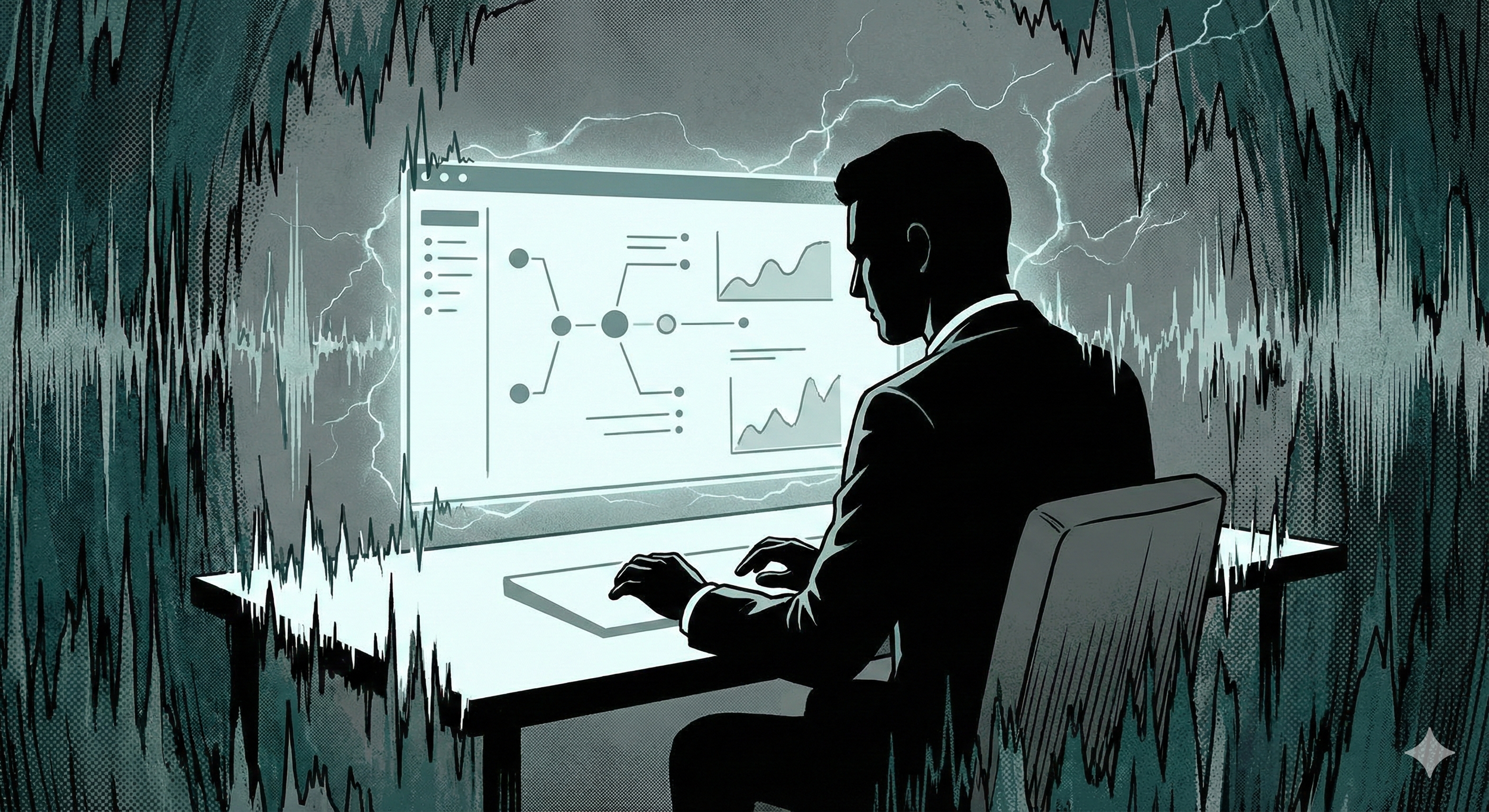
We have been promised an AI revolution for several years now. The kind of revolution that empties whole job categories before lunch and rewrites the org chart by Christmas. The reality has been less revolutionary than incremental, and slightly less photogenic than the keynote suggested.
Today’s generative systems are powerful, but they still struggle with context, nuance, and the unspoken rules that govern real work. They can replicate form. They cannot always replicate meaning. In other words, they are brilliant generalists and unreliable specialists, which is an awkward thing to put on a roadmap.
A recent MIT NANDA study put a number on the gap. It found that around 95 percent of generative AI pilots in business deliver no measurable return, despite enterprise spending of 30 to 40 billion dollars on the technology. The 5 percent that do work tend to share one quiet feature. Humans are deeply involved in the work the AI is doing. That is the bit the press release usually leaves out.
At Metamorphic Services we take a different view of where the opportunity actually sits. The real prize is not replacement. It is augmentation. AI used to extend human capability rather than diminish it. When people and AI systems work together, each doing what they are good at, the results are consistently stronger, and considerably less embarrassing.
Why “Automate Everything” Was Never the Plan
The first wave of enterprise AI borrowed heavily from the playbook of robotic process automation. If a task moved in straight lines, automate it. Humans were left to handle the exceptions, which turned out to be most of the interesting work, and almost all of the work that mattered.
Automation delivers efficiency, sometimes spectacularly. It rarely delivers adaptability. The moment a process changes, the system breaks, and the fix typically arrives in a steering committee three weeks later, accompanied by a colour-coded slide.
Augmentation takes a different path. It recognises that machines and humans have very different strengths. AI handles scale, speed, and pattern recognition. Humans bring context, ethics, creativity, and the ability to spot when a pattern should be ignored entirely. Paul Daugherty and James Wilson, in their book Human + Machine, call this the missing middle. A class of work where humans and machines cooperate to be more effective than either could be alone.
When humans refine AI outputs and AI challenges human assumptions, both sides quietly get better. It is less about replacing the craftsman and more about giving them sharper tools. Occasionally, a tool that talks back.

Relax. The Robots Are Not After Your Desk
Most internal conversations about AI eventually return to the same question. Is it going to take my job? It is an understandable concern, helped along by every vendor whose marketing strategy involves implying yes, then selling a solution.
The reality is more nuanced. AI still depends heavily on the people who train, guide and question it. Left to its own devices, it is capable of breathtaking productivity and equally breathtaking mistakes. KPMG’s 2025 global study on trust in AI found that only 46 percent of people are willing to trust AI systems, that more than half of regular users have made a mistake at work because of AI, and that two thirds use AI without evaluating its accuracy. Confidence has not yet caught up with capability, and probably should not.
Augmented workflows are designed around that truth. They allow people to step in where AI falls short, when the situation is ambiguous, the data incomplete or the stakes high. Humans are not removed from the loop. They are the loop.
In teams that adopt this mindset, the tone changes. People stop competing with the technology and start mentoring it. They teach the AI what good looks like. They use it to see more, decide faster and act with more confidence. Fear tends to fade when the story shifts from “AI is coming for us” to “AI works because of us.” A quieter story, but a more accurate one.
Start With the Humans, the Tech Will Catch Up
Technology adoption is easy to talk about and hard to do. AI is no exception.
The organisations getting this right are not the ones with the biggest models. They are the ones investing early in their people. Enabling teams to think with AI, not just use it. Mapping where human judgement genuinely adds value, then designing workflows that bring humans and AI into contact at exactly those moments. Putting feedback loops in place so both sides learn from the outcomes.
McKinsey’s 2025 work on AI in the workplace points in the same direction. The biggest constraint on enterprise AI value is not the technology. It is the operating model around it. Less than half of employees report having had any AI training. Only around 40 percent of organisations have a clear policy on generative AI use. The model is fine. The scaffolding around the model is the bit that needs work.
Culture is the multiplier. When AI is introduced as a cost-cutting measure, people resist it. When it is positioned as a capability amplifier, they engage with it. The most forward-looking leaders treat AI not as a way to replace skill, but as a way to deepen it. That is where the compounding gains come from. Learning, trust and better decisions reinforcing each other over time, slowly enough that nobody panics, quickly enough that it shows up in the numbers.
Leading When the Smartest Person in the Room Is a Machine
Leading in the age of AI is not about understanding every algorithm. It is about knowing what questions to ask. Leaders now sit at the intersection of technology, ethics and psychology, guiding teams through a shift that is as emotional as it is operational.
The job is not to champion the technology. It is to make the technology useful. That means setting a tone of curiosity over fear, experimentation over control, and collaboration over compliance. It also means resisting the temptation to greet every new model with a town hall and a dashboard.
The best leaders we work with treat AI adoption like any other change. They narrate the journey. They explain what is happening and why. They invite feedback, highlight the early wins and make learning visible. In short, they model the behaviour they want the rest of the organisation to copy. Openness, adaptability, and a certain calmness in the face of acronyms.
AI will not make leadership obsolete. If anything, it makes leadership more human than ever. Which is, depending on your view of recent technology cycles, either ironic or overdue.

Trust Me, I Am an Algorithm (Sort Of)
Trust has always been the invisible interface between people and systems. With AI, it becomes the visible one too. No amount of model accuracy will matter if the people using it do not believe it understands their world.
Trust is not built on transparency slides and governance frameworks, although both have their moment in the sun. It is built in the small moments when the system earns its credibility. When an analyst can trace why a decision was made. When a recommendation reflects lived experience and not just data patterns. This is part of why we built Metamorphic Keystone, designed to make that trail visible. <metamorphic/keystone link here>
The data backs the instinct. In one recent global survey, only 17 percent of workplace AI users said the technology could be relied on without human oversight. Around seven in ten preferred AI plus a human review, which is a polite way of saying they have read the small print.
The irony is that trust has become the human differentiator. Machines do not need to trust. People do. That makes AI adoption as much a social process as a technical one. The most successful deployments are not the ones with perfect accuracy scores. They are the ones where users say, “I know when to believe it and when to question it.”
Designing for that level of trust means embracing imperfection rather than hiding it. Confidence does not come from pretending AI is flawless. It comes from making the flaws visible and manageable, then giving people the authority to push back. The best AI systems quietly accept they will sometimes be wrong, and design for that fact rather than against it.
Where Our Focus Sits
The future of work is not human or machine. It is human and machine, working together, learning from each other, and occasionally getting on each other’s nerves.
“AI that thinks with us, not for us” is not a marketing line. It is the foundation for the next decade of intelligent work. It asks us to design systems where AI extends human perception and humans guide AI toward meaning. The World Economic Forum has reported that organisations integrating human-AI teams see productivity gains of up to 30 percent and significant improvements in customer satisfaction. The numbers are encouraging. They are also a long way from the original promise of unattended automation, which is, on balance, fine.
Doing this well will require new kinds of collaboration between technologists, domain experts, and the people who understand the messy middle where real work actually happens. It will also require humility. Machines are fast learners. Humans still understand why learning matters.
If we can build that partnership on curiosity, respect and shared learning, AI will not diminish human intelligence. It will extend it. That is the work Metamorphic was set up to do, and it is, by some distance, more interesting than the alternative.
A future worth investing in. Quietly, and properly.
References and Sources
MIT NANDA: “The GenAI Divide : State of AI in Business 2025.” Around 95 percent of enterprise generative AI pilots deliver no measurable return on investment. https://nanda.media.mit.edu/ai_report_2025.pdf
Fortune coverage of the MIT NANDA report. 95 percent of generative AI pilots at companies are failing. https://fortune.com/2025/08/18/mit-report-95-percent-generative-ai-pilots-at-companies-failing-cfo/
KPMG and University of Melbourne: “Trust, Attitudes and Use of Artificial Intelligence: A Global Study 2025.” Only 46 percent of people are willing to trust AI systems. https://kpmg.com/xx/en/our-insights/ai-and-technology/trust-attitudes-and-use-of-ai.html
KPMG global trust in AI report (PDF). Two thirds of users rely on AI without evaluating its accuracy and 56 percent have made mistakes at work because of it. https://assets.kpmg.com/content/dam/kpmgsites/xx/pdf/2025/05/trust-attitudes-and-use-of-ai-global-report.pdf.coredownload.inline.pdf
McKinsey: “Superagency in the Workplace : AI in the Workplace 2025.” Only 47 percent of employees say they have received AI training and only 40 percent of organisations have a clear generative AI policy. https://www.mckinsey.com/capabilities/tech-and-ai/our-insights/superagency-in-the-workplace-empowering-people-to-unlock-ais-full-potential-at-work
Connext Global survey via BusinessWire. Only 17 percent of US adults using AI at work say it can run on its own with minimal human involvement. https://www.businesswire.com/news/home/20260218894481/en/Only-17-Say-Workplace-AI-Is-Reliable-Without-Human-Oversight-New-Connext-Global-Survey-Finds
Harvard Business Review: “Workers Don’t Trust AI. Here’s How Companies Can Change That.” https://hbr.org/2025/11/workers-dont-trust-ai-heres-how-companies-can-change-that
Paul R. Daugherty and H. James Wilson: Human + Machine : Reimagining Work in the Age of AI (Harvard Business Review Press, updated and expanded edition, 2024). Origin of the “missing middle” framework. https://store.hbr.org/product/human-machine-updated-and-expanded-reimagining-work-in-the-age-of-ai/10724
Accenture: Human + Machine : Reimagining Work in the Age of AI. Companion research and case studies. https://www.accenture.com/us-en/insights/technology/human-plus-machine
World Economic Forum and Gloat: “Why an AI Augmented Workforce Is the Future.” Companies integrating human-AI teams report up to 30 percent productivity gains and improved customer satisfaction. https://gloat.com/blog/ai-augmented-workforce/
Atlassian: “State of Teams 2025 : AI Collaboration Report.” Employees whose leadership encourages experimentation save substantially more time per day with AI. https://www.atlassian.com/blog/productivity/ai-collaboration-report

Dan Pears is a solution architect and co founder of Metamorphic Services. His work sits at the intersection of legacy systems, data, and the very human reality of organisational change. After years spent helping large enterprises modernise the right way, he now focuses on making AI useful rather than theatrical. He writes about technology with one simple belief in mind: transformation starts with understanding, not disruption.